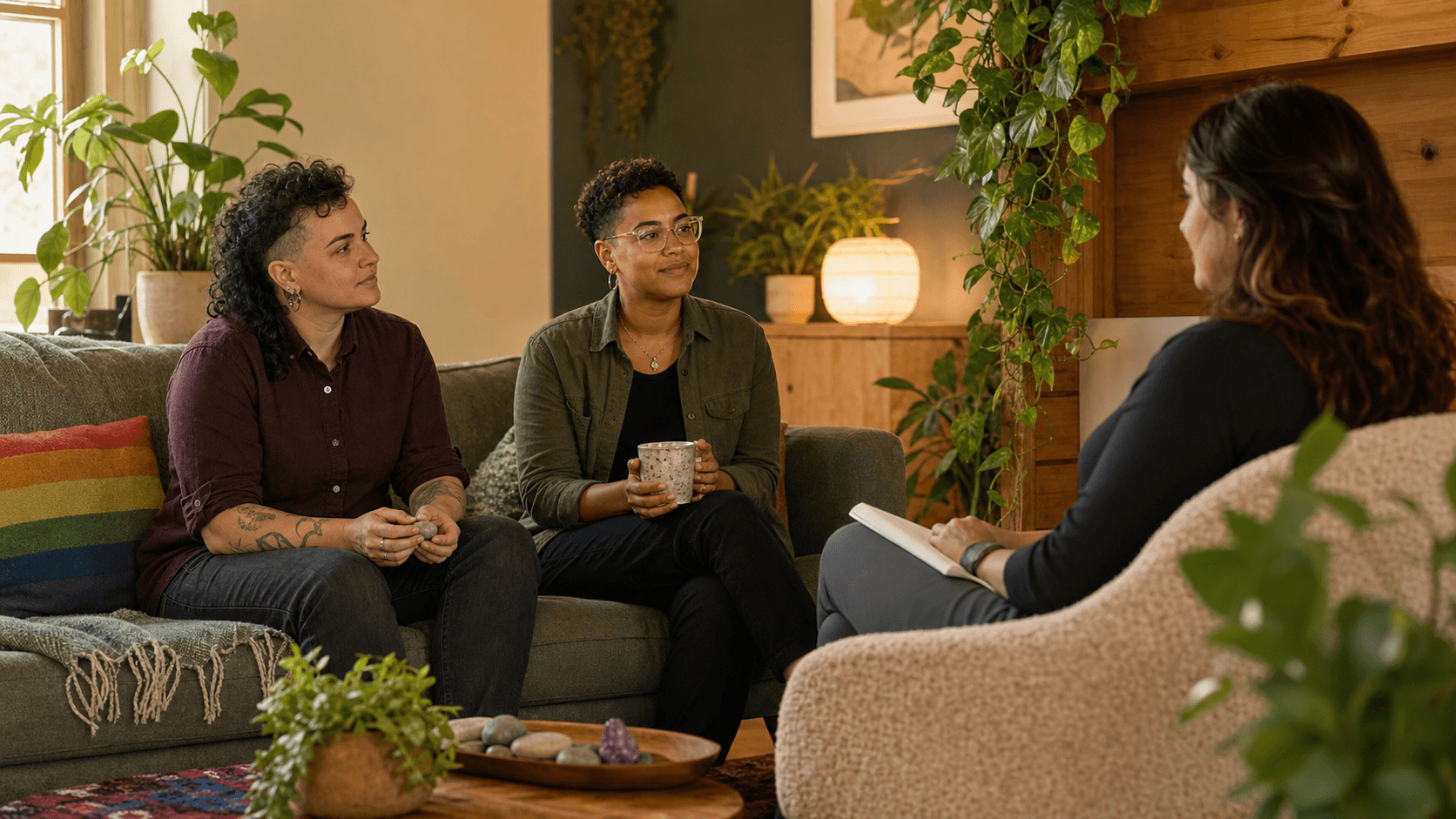
Finding Support That Truly Fits Who You Are
Questioning your identity or living life as LGBTQIA+ in the South can feel lonely. You might be the only out person in your family, your school, your job, or your small town. You may be carrying comments, stares, or silence that leave you wondering if you are "too much" or "not queer enough," all at the same time.
It is very common to wonder if you really need an LGBTQIA+ therapist or if any kind, caring therapist will do. You might worry about being "dramatic" for wanting someone who understands queer and trans lives. Or maybe you tried therapy before and felt like you had to translate your whole existence just to get basic support.
An affirming, identity-aware therapist can help lower stress, support your mental health, and give you a place where your whole self is welcome. At Be BOLD Psychology and Consulting in Durham, we offer queer- and neurodivergent-affirming therapy in person and through telehealth across NC, SC, and VA, with a focus on helping you feel grounded in who you are. Let us walk through what that can look like and how to tell if it might be right for you.
What Makes LGBTQIA+ Therapists Different
LGBTQIA+ therapists are not just therapists who happen to be queer or trans. They are therapists who intentionally learn about the many real-life contexts that shape LGBTQIA+ mental health, including coming out at different ages and stages, family rejection or strained relationships, minority stress and ongoing discrimination, religious trauma and spiritual abuse, gender dysphoria and euphoria, and the process of writing letters and offering support for hormones or surgery.
Many therapists are kind and mean well, but if they are inexperienced with LGBTQIA+ issues, they can still cause harm. That harm can show up in ways like:
- Misgendering or using the wrong name
- Avoiding topics like homophobia or transphobia
- Over-focusing on your identity as "the problem"
- Minimizing discrimination or telling you to just ignore it
With an LGBTIA+ celebratory therapist, you do not have to explain basic terms, pronouns, or why your queerplatonic partner matters just as much as a legal spouse. That sense of not having to educate your therapist can bring a lot of relief.
At the same time, LGBTQIA+ celebratory therapists still work with everyday concerns like anxiety and depression, ADHD and autism, trauma from many parts of life, and relationship, sexual, and intimacy concerns. The difference is that they see how identity, neurodivergence, and systems of oppression all shape those experiences, instead of treating them as separate.
Signs an LGBTQIA+ Therapist May Be Right for You in NC
People across North Carolina come to LGBTQIA+ therapists for many reasons. Some are practical and tied to the realities of where and how you live, such as:
- Dealing with hostile or unsafe work or school spaces
- Feeling pressure from church or family to hide who you are
- Dating or finding community in smaller or rural towns
- Moving between more conservative and more affirming areas
Sometimes the signs are more emotional than practical. You might notice you feel hyperaware of being "too loud," "too queer," or "too trans," or that you constantly censor yourself even in spaces that are supposed to be safe. You may feel like you live a double life between home, work, and friends, or realize you hid parts of yourself in past therapy because you did not feel understood.
If you are questioning your gender or sexuality, an LGBTQIA+ therapist can offer space to explore without pressure to pick a label fast or prove that you "count." You get to be unsure, fluid, changing, or private, and that is okay.
Access also matters. If you live in a rural part of NC, SC, or VA, local options may feel limited or unsafe. Telehealth with an affirming therapist can open doors that your town or county cannot right now.
How LGBTQIA+ Celebratory Therapy Works Day to Day
Your first session with an LGBTQIA+ therapist is usually about getting to know you, not grilling you. You might talk about:
- What brings you in and what feels hardest right now
- Your history with mental health, identity, and relationships
- Past experiences with therapy, church, school, or family
- What you hope will feel different in your life
- Boundaries you need to feel safer in the room
You are always allowed to say what topics are off limits or what feels too raw for now. A good therapist will respect that and check in with you along the way.
LGBTQIA+ celebratory therapists may use a mix of approaches, such as:
- Trauma-informed care that understands chronic stress
- Strengths-based work that honors your resilience
- Parts work that helps different sides of you feel heard
- CBT tools to work with thoughts, feelings, and behavior
- Affirming psychological evaluations for ADHD, autism, or gender-related care
All of this is filtered through a queer and neurodivergent-affirming lens. That includes talking openly about intersectionality. Your therapist should be able to hold how being queer or trans might connect with being BIPOC, disabled, neurodivergent, religious, or from a rural background.
Around Pride season in the summer, therapy can be a place to:
- Process mixed or painful feelings about Pride
- Plan for events in ways that protect your body and heart
- Talk about feeling "not out enough" or "not queer enough"
- Decide how visible you want to be and what feels safe
You do not have to be excited about Pride to belong in LGBTQIA+ spaces or in LGBTQIA+ celebratory therapy.
Questions to Ask When Choosing an LGBT Therapist
Finding a good fit starts with asking clear questions. Some ideas for a consult call include:
- How do you approach work with LGBTQIA+ clients?
- What experience do you have with trans and nonbinary clients?
- How do you handle it if you make a mistake with my identity?
- How do you talk about racism, ableism, and transphobia in therapy?
It is also okay to ask about special needs you might have, such as:
- Couples or relationship therapy that is affirming of queerness and polyamory
- Family therapy for parents or caregivers of queer or trans kids
- Support for mixed-faith or mixed-politics families
- Evaluations connected to gender-affirming care
Pay attention not just to the content of their answers but the feel of them. The details of how a therapist communicates can tell you a lot about whether they are practicing in an affirming, identity-aware way. For example, notice:
- Do they share their pronouns without pressure on you to share yours?
- Do they use gender-neutral language when they do not know your partner's gender?
- Do they talk about oppression as real stressors?
At Be BOLD Psychology and Consulting, we welcome these questions. Our team is licensed to work with clients in NC, SC, and VA, and we offer individual, couples, family, group therapy, and evaluations both in person in Durham and through telehealth, so you can choose what works for you.
What to Do If You Feel Nervous to Start
Feeling nervous to start with an LGBTQIA+ celebratory therapist is completely normal, especially if you have been hurt or dismissed before by providers, churches, schools, or family. You might worry you will freeze, cry, or not be able to get the words out.
Some gentle steps that can help:
- Start with a low-pressure consultation to see how it feels
- Write down a few notes about what you want to share
- Email your name, pronouns, and key concerns ahead of time
- Let your therapist know if certain words or topics are hard to say aloud
You do not have to have chosen labels to benefit from LGBTQIA+ celebratory therapy. You might be questioning, changing, or never want to pick a specific term. You are still welcome.
The summer, especially around Pride, can stir up a lot. That mix of visibility, celebration, grief, and pressure can be heavy. It can also be a powerful time to get support, process what is coming up, and set intentions for how you want to move through the rest of the year as your full self.
Frequently Asked Questions
Do I need to be sure about my identity to see an LGBTQIA+ therapist?
No, you do not. Whether you are questioning, changing, or private, you are welcome. There is no pressure to pick a label or "prove" your identity to benefit from therapy.
What makes LGBTQIA+ therapists different from other kind therapists?
They are intentionally trained in the specific contexts that shape queer and trans lives, such as minority stress, gender dysphoria, and family or religious trauma. Working with them means you don't have to spend energy explaining basic terms or pronouns, allowing you to focus on your actual support needs.
Can I receive therapy if I live in a rural area or outside of Durham?
Yes. Be BOLD Psychology and Consulting offers both in-person sessions in Durham and telehealth services for clients across North Carolina, South Carolina, and Virginia, helping you access support regardless of your location.
What if I'm nervous about starting therapy?
It is completely normal to feel nervous. You can ease into the process by scheduling a low-pressure consultation, writing down notes about what you want to share, or emailing your name, pronouns, and key concerns ahead of time.
What questions should I ask a potential therapist during a consult call?
You should feel empowered to ask about their specific approach to LGBTQIA+ clients, their experience with trans and nonbinary individuals, how they handle mistakes regarding identity, and how they address stressors like racism, ableism, and transphobia.
Take The Next Step Toward Affirming Support
If you are ready to move toward healing with clinicians who truly understand queer and trans experiences, we are here to help. Our team of LGBTQIA+ therapists offers affirming, evidence-based care tailored to your unique needs. At Be BOLD Psychology and Consulting, we work collaboratively with you so you never have to navigate this process alone. Reach out today through our contact page to schedule your first appointment or ask any questions.